Trending


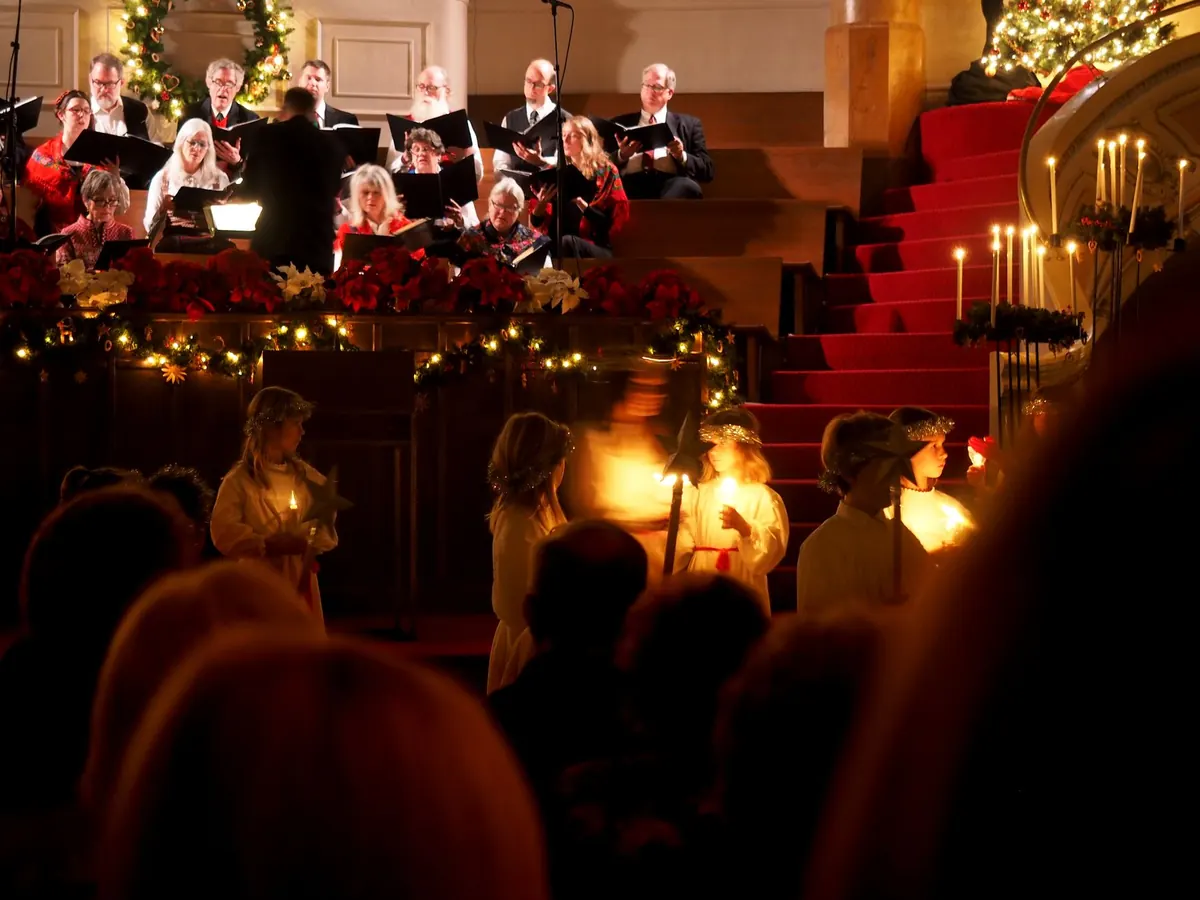
Advent begins on the fourth Sunday before Christmas, so it can land as early as November 27 or as late as December 3. For a congregation of thirty or forty people, that leaves four Sundays to find readers, set out a wreath, and still keep Christmas Eve from arriving as a surprise. The temptation is to shrink the season down to a wreath and a hurried announcement. A better approach is to scale it well: two readings a week, one candle, and one gathering people can genuinely attend.
What follows is a workable plan for a small building, a handful of volunteers, and a budget closer to twenty dollars than two hundred.
Put the wreath on a low table near the front, at eye level for someone in the third row. A wreath perched on a high ledge reads as decoration; a wreath at table height reads as furniture, and people watch furniture.
The supply list is short:
Assign the lighting a month ahead and print the names in the bulletin. When a household knows it is lighting the second candle on December 8, they plan for it.
The lectionary readings rotate on a three-year cycle, so check your own year before printing. In Year B, the first Sunday brings Isaiah 64:1-9, Psalm 80:1-7, 1 Corinthians 1:3-9, and Mark 13:24-37. Do not read all four aloud. Pick two — the Isaiah and the Gospel — and let the psalm be read responsively by the congregation.
Mark's talk of a darkened sun fits the season better than most people expect. This is the week to name the dark honestly rather than hurry past it, and the first candle is lit as a single small answer to it.
Week two turns toward comfort: Isaiah 40:1-11, Psalm 85, 2 Peter 3:8-15a, and Mark 1:1-8. John the Baptist arrives in the Gospel, calling for a straight path. If your congregation sings, this is a good Sunday for "Prepare the Royal Highway" or a simple setting of "Comfort, Comfort Ye My People."
Two candles now burn and two wait. Someone will ask why the wreath looks unfinished. That question is the sermon.
The third Sunday brings Isaiah 61:1-4 and 8-11, Psalm 126, 1 Thessalonians 5:16-24, and John 1:6-8 and 19-28. Much of the Western church lightens the tone this week — the pink candle belongs here in many traditions, though some congregations light it on the fourth Sunday instead. Decide in advance, write it in the bulletin, and tell the person holding the lighter so nobody is caught off guard in front of everyone.
The final week before Christmas moves close to the manger: 2 Samuel 7:1-11 and 16, Psalm 89:1-4 and 19-26, Romans 16:25-27, and Luke 1:26-38. Mary's answer to the angel is the whole text. Four candles burning is bright, and the room should feel it.
On Christmas Eve or Christmas morning, light the white center candle. Read Luke 2:1-20 and place the figure of the child in the manger you left empty four weeks ago. It takes five minutes and it carries the entire season.
One event per week is plenty. Choose the four that match the energy your people actually have in December, not the energy you wish they had.
Write the whole season on a single page and keep it in the lectern. If it does not fit, the plan is too big.
Small congregations do Advent best when they stop trying to match a large church's calendar. Four candles, four short readings, one gathering a week. Set the wreath low, hand out the matches, and let the weeks do their slow work.
Photo: webandi / Pixabay